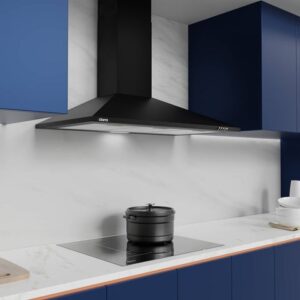
Filtration systems play a critical role in ensuring effective operation, with most cabinet range hoods utilizing either mesh or baffle filters to trap grease and particulates; these filters are typically removable and dishwasher-safe, making maintenance more convenient and encouraging regular cleaning, which is essential for sustaining airflow efficiency and reducing fire risk. For ductless or recirculating cabinet range hoods, charcoal or carbon filters are used to neutralize odors before air is returned to the kitchen, and while these filters require periodic replacement, they offer a practical solution for kitchens where external ducting is not feasible due to structural constraints or building regulations. From an aesthetic standpoint, cabinet range hoods have expanded far beyond the standard stainless steel look, now available in black, white, matte finishes, custom panel-ready designs, and even options that allow cabinetry panels to be mounted directly onto the hood, creating a fully concealed appearance that maintains uninterrupted cabinet lines and supports cohesive interior design themes.
This adaptability makes cabinet range hoods especially appealing to homeowners working with interior designers or renovators who aim to balance performance with visual harmony. Installation considerations are also important, as proper placement height above the cooktop is crucial for optimal performance and safety, with manufacturers providing specific guidelines to ensure effective capture of rising smoke and heat without obstructing cooking activities. Professional installation is often recommended, particularly for ducted systems, to best ductless range hood correct venting, electrical connections, and adherence to local building codes, which ultimately contributes to long-term reliability and efficiency. Energy efficiency has become an increasingly important factor in appliance selection, and cabinet range hoods are no exception, with many models designed to consume less power while delivering strong performance, supported by efficient motors and LED lighting that reduce overall energy usage and align with sustainable living goals. The role of a cabinet range hood extends beyond immediate comfort, as effective ventilation helps preserve indoor air quality by reducing exposure to pollutants such as nitrogen dioxide, carbon monoxide, and fine particulate matter produced during cooking, which can be particularly important for households with children, elderly residents, or individuals with respiratory sensitivities.
Over time, proper ventilation also protects cabinetry, walls, and ceilings from grease accumulation and moisture damage, potentially extending the lifespan of kitchen finishes and reducing cleaning and maintenance costs. In real estate contexts, a well-chosen cabinet range hood can add perceived value to a home, signaling thoughtful design and functional completeness to potential buyers who increasingly recognize the importance of kitchen ventilation as part of a healthy and modern living space. The market for cabinet range hoods continues to evolve, driven by consumer demand for quieter operation, smarter controls, customizable aesthetics, and higher performance within compact forms, leading manufacturers to invest in research and development that pushes the boundaries of what these appliances can offer. As cooking trends continue to emphasize global cuisines and techniques that often involve high heat and aromatic ingredients, the importance of reliable and efficient ventilation becomes even more pronounced, reinforcing the cabinet range hood’s role as a cornerstone of kitchen functionality rather than a secondary accessory.
Whether integrated discreetly into cabinetry or showcased with subtle design accents, a cabinet range hood ultimately represents the intersection of engineering, design, and everyday practicality, quietly supporting the rhythms of daily life by ensuring that the kitchen remains a comfortable, clean, and inviting space where meals are prepared, conversations unfold, and memories are made, all while operating efficiently in the background to manage the invisible challenges of cooking that, without proper ventilation, could otherwise compromise both comfort and long-term home quality.